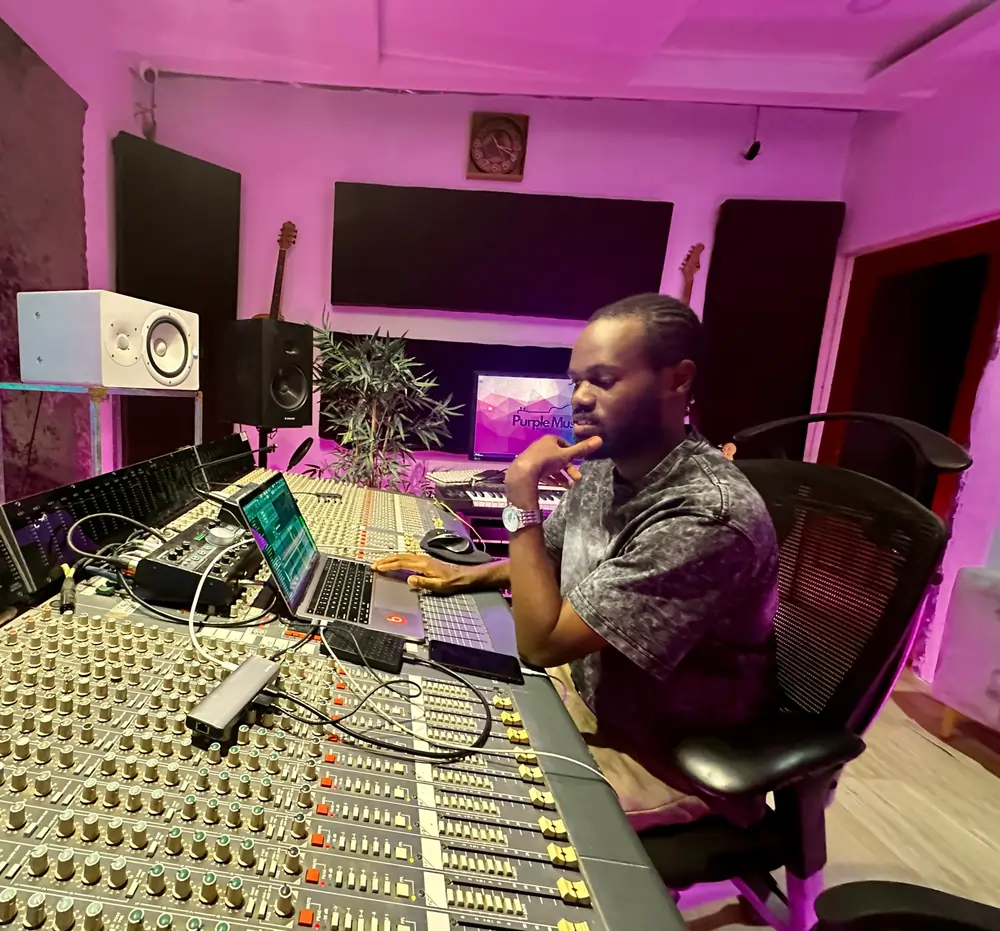
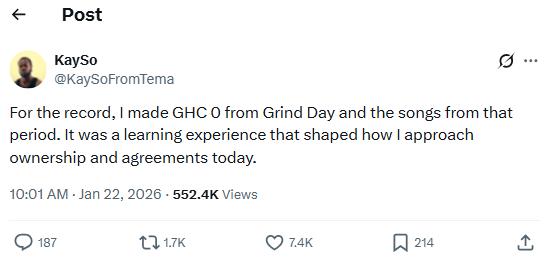
On Thursday 22nd January, 2026, Ghanaian producer, Kayso, tweeted “For the record, I made GHC 0 from Grind Day and the songs from that period. It was a learning experience that shaped how I approach ownership and agreements today.“
KaySo’s statement comes amid a public dispute between rapper Kwesi Arthur and his former team/label Ground Up, Chale (GUC). The dispute has been trending online with posts from both Kwesi Arthur and others commenting on perceived unfair business arrangements between artists and the label.
KaySo (Sony Kwame Owusu) produced Grind Day, the breakout 2017 hit that propelled Kwesi Arthur to national fame, and its remix featuring Sarkodie and Medikal. The song later won Hip-Hop Song of the Year at Ghana’s 2018 Vodafone Ghana Music Awards.
In a series of posts on X (formerly Twitter), KaySo said that despite his role producing Grind Day and other songs from that era, he personally received no revenue from those works. He described that experience as a learning moment about ownership, contracts, and how creative rights should be managed.
KaySo’s comments weren’t isolated; they were shared alongside and in response to Kwesi Arthur’s own criticisms of Ground Up, Chale, including allegations about how the label has managed rights, control over his image, and use of his work. Some reporting noted that Kwesi Arthur also publicly accused the label and its CEO of demanding large sums (such as US$150,000) for use of his own photos.
The situation has sparked wider conversations in the Ghanaian music community about:
- how producers and artists are compensated,
- how contracts are structured,
- and how intellectual property ownership is handled—especially in early career stages before artists and producers have strong legal or business support.
KaySo framed his experience as a hard lesson that now influences how he approaches ownership and agreements going forward.
Discover more from Beatz Nation
Subscribe to get the latest posts sent to your email.